A new study examined the beliefs and behaviors of anglers around health messaging regarding exposure to contaminants, including per- and polyfluoroalkyl substances (PFAS), from eating locally caught fish. Researchers found that although many anglers were aware of general fish contaminants like mercury or PCBs, specific knowledge about PFAS was low.

- Fishing near docks along Lake Michigan in Chicago. Photo: Illinois Indiana Sea Grant
This project focused on the risks associated with PFAS, which are a group of synthetic chemicals used in various industrial applications and consumer products since the mid-20th century, because of their inability to break down in the environment or the human body. As a result of this persistence, PFAS are frequently referred to as “forever chemicals.” The goal of the study, “Fish consumption and knowledge of PFAS among communities of color in the Lake Michigan region,” led by Dr. Susan Buchanan of the University of Illinois Chicago School of Public Health, was to provide information that can be used to better inform health messaging to these populations.
The team conducted data walks, or listening sessions, that included a written survey with anglers on the southside of Chicago’s lakefront and in Benton Harbor, Michigan. Eighty-five anglers completed the survey over the summer and fall of 2024. They found that anglers of all ages fish year-round in multiple locations, frequently consume the fish they catch, and eat various parts of the fish in addition to fillets. This consumption pattern was significant because certain contaminants, including some types of PFAS, can concentrate differently in different tissues. This practice significantly increases the potential for chemical exposure compared to someone who only eats the muscle tissue or fillets.
The results also showed that the anglers had little awareness of contaminants in fish or PFAS in particular. Despite the frequent consumption of locally caught fish, the study highlighted a lack of public awareness regarding the specific risks of PFAS. While many anglers were aware of general fish contaminants like mercury or PCBs, specific knowledge about “forever chemicals” was notably low. This gap in knowledge is particularly concerning given the persistence of these chemicals in the Lake Michigan ecosystem.
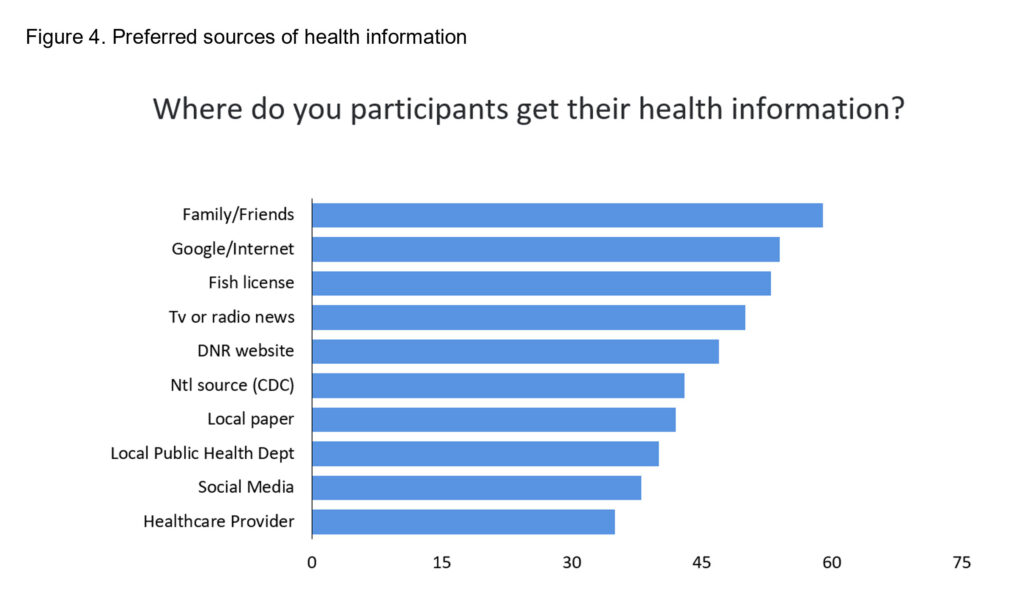
However, researchers did see evidence of self-efficacy, which is a characteristic that can be amplified in health messaging. High self-efficacy leads people to attempt challenging tasks, put in more effort, and persist through setbacks. The anglers access a wide variety of sources of health and fishing information as well as expressing varied levels of trust in those sources.
Regarding trust in sources of health information, although none stood out above the others, the survey showed that anglers trusted the Michigan Department of Natural Resources website, national sources such as the Centers for Disease Control, local public health officials, Google, and information related to fishing licenses. Facebook is a common source of information.
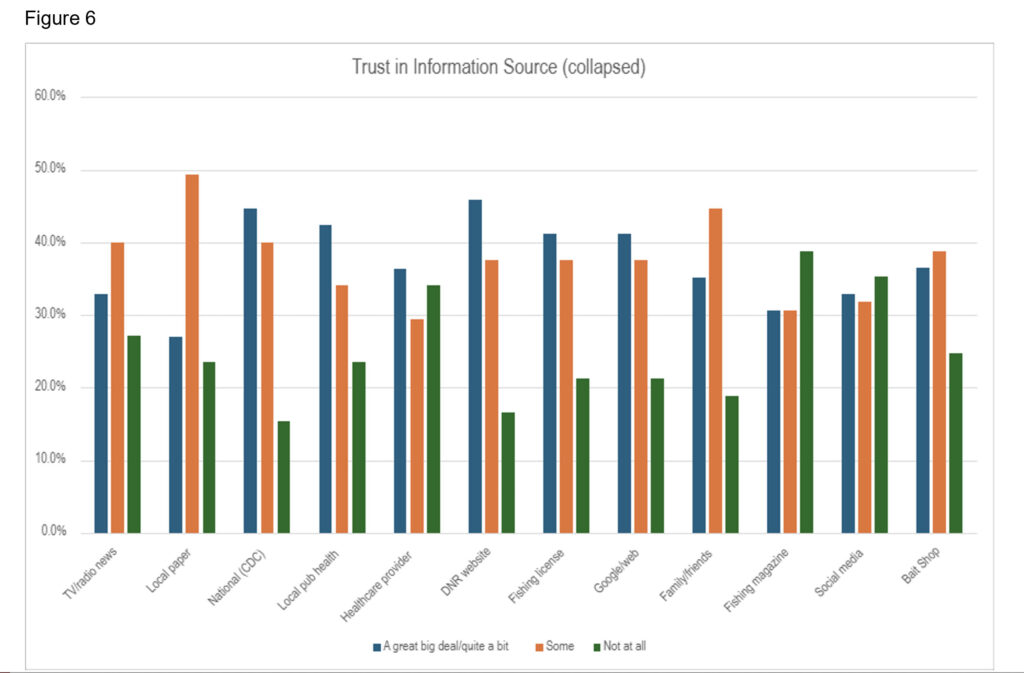
This information suggests that a one-size-fits-all approach to public health messaging is unlikely to be effective. Instead, the study emphasizes that health communication must be carefully tailored to the cultural and social contexts of the specific populations being served. These results emphasize the urgent need for targeted education regarding PFAS in freshwater ecosystems. As communities continue to grapple with the legacy of industrial pollution in the Great Lakes, understanding the human element—how people interact with their environment and where they get their information—is just as vital as monitoring the chemical levels in the water itself.
This research was part of a suite of four projects led by Illinois-Indiana Sea Grant, with funding from the National Sea Grant Office, that focused on the social impacts of PFAS exposure.
- Fact sheet (PDF)