This summer’s annual “HABs Grab” – a region-wide, large-scale, collaborative research effort focused on understanding Harmful Algal Blooms (HABs) in the Great Lakes – has expanded to include new partners, through the Great Lakes Commission’s HABs Collaborative group, and additional lakes and sampling locations. While a previous effort in 2019 focused on Lake Erie, sampling locations now include all five Great Lakes.
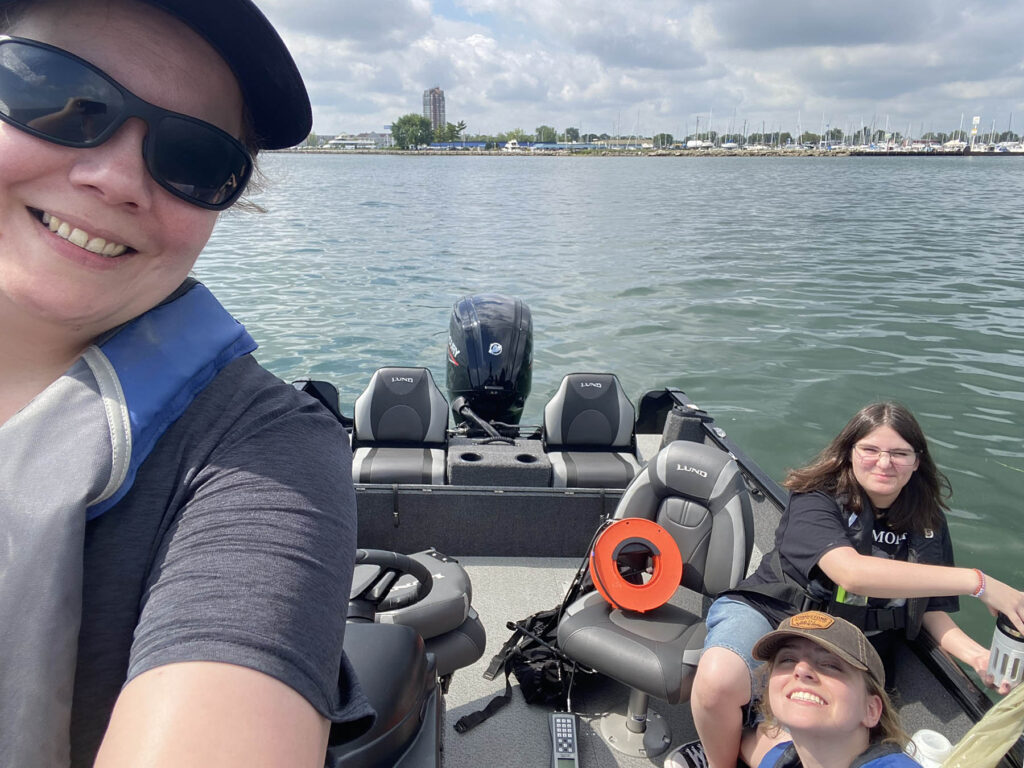
Photo: Nicole Wagner
The HABs Grab involves scientists and researchers from multiple institutions in the region, including universities, government agencies, and research centers, working together to collect water samples from several Great Lakes locations simultaneously. The collected samples are analyzed to determine the extent and severity of any algal blooms, including the presence and concentration of toxins, and other factors like nutrient levels. This information allows scientists to assess the extent and severity of blooms at a specific point in time, and their potential toxicity, which is crucial for protecting human and ecosystem health and for managing the risks associated with these blooms.
Michigan Sea Grant (MISG) has provided funding to Dr. Trista Vick-Majors, a professor in the Department of Biological Sciences at Michigan Technological University, to coordinate this summer’s grab in August 2025. The HABs Collaborative has also been instrumental in coordinating and supporting sampling across the region. Dr. Silvia Newell, MISG director, joined a sampling effort with Nicole Wagner and students from Oakland University to collect samples from Lake St. Clair near Detroit. The HABs Grab is partnering with the Great Lakes Winter Grab team, also supported by MISG and headed by Vick-Majors, along with co-PI Gordon Paterson, and Michigan Tech PhD student Connor O’Loughlin, to coordinate this August’s effort.
Nuisance versus Toxic Blooms
Harmful algal blooms are caused by excessive algae growth that can cause negative effects to the environment, other organisms, human health, or drinking water. Not all HABs are toxic, however; some HABs are considered nuisance blooms that cause aesthetic problems like discoloration, bad odors, or an unpleasant taste in water. They can also cause fish kills, foul nearby coastlines, and produce conditions that are dangerous to aquatic life.
Toxic HABs are caused by cyanobacteria, which are commonly referred to as “blue-green algae,” but are, in fact, bacteria. The most widely found blue-green algae in the Great Lakes is Microcystis, which can produce microcystin, a liver toxin and skin irritant. Other types of cyanobacteria can also produce toxins that affect the liver, nervous system, and cell structures. In addition, water treatment plants may be unable to remove these toxins, which can lead to drinking water advisories, as happened in Toledo, Ohio, after HABs bloomed in Lake Erie in August 2014.
As HABs become more widespread, researchers around the world are working to identify factors that affect bloom timing, distribution, toxicity, and species composition. However, genetic variety within and among Microcystis strains makes it difficult to isolate these factors, especially when translating between laboratory and lake environments. Scientists are gathering this data to help improve understanding of the connection between seasonal processes in the lakes and ecology and health of their ecosystems. The results of this research will help scientists and managers understand productivity in the Great Lakes, which can impact fisheries, spring plankton blooms that form the basis of food webs, and potentially summer harmful algal blooms. This data is critical to understand the impact on some commercially important fish species such as whitefish.
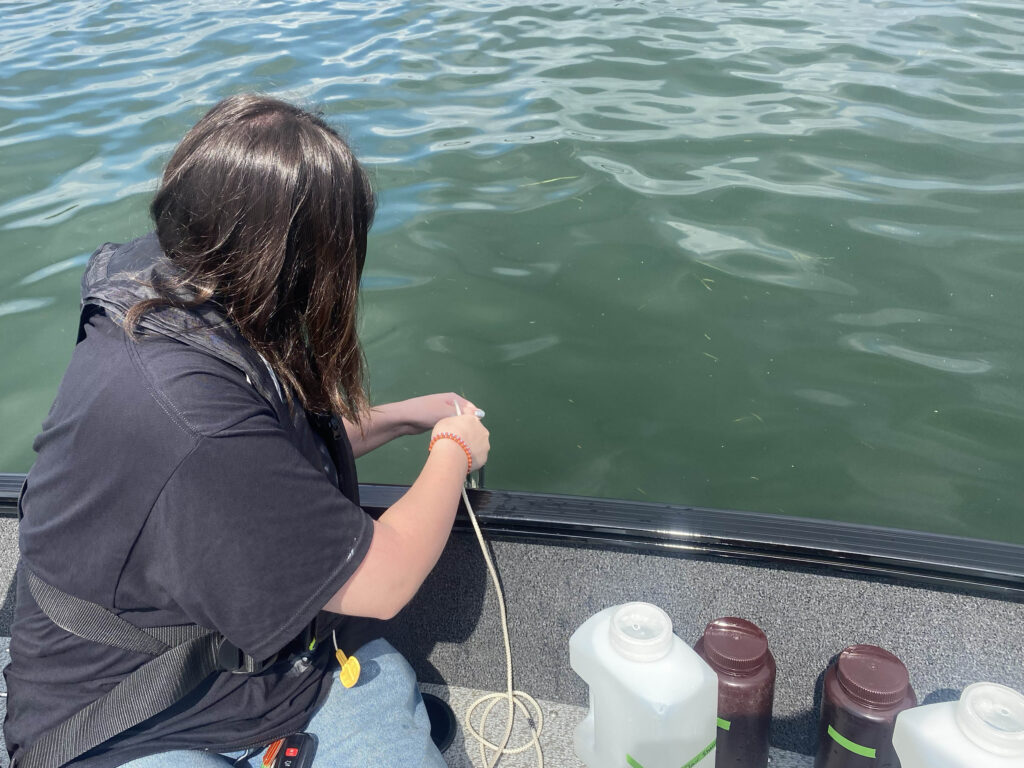
Photo: Nicole Wagner
Solving the HABs Problem
Factors such as nutrient availability and phytoplankton productivity can affect blooms. MISG Director Newell is co-leading a complementary, National Science Foundation-funded research project with Lead PI Dr. Jenan Kharbush (University of Michigan) and Dr. Chris Ward (Bowling Green State University) that is gathering data to understand how nitrogen cycling impacts nutrients and phytoplankton communities in large, temperate water bodies. In this project, the team is using Lake Erie as a case study because it is one of the most socioeconomically important resources in the United States, providing drinking water, recreation, and fisheries on which millions of people depend. In the last few decades, winter, spring, and summer phytoplankton communities in Lake Erie have changed significantly due to several factors, including invasive species, warming waters, and cultural eutrophication. The research team is gathering data to improve understanding of nitrogen cycling to help determine how changes are affecting phytoplankton and, consequently, food webs and fisheries.
In addition to the partners above, this year’s HABs grab includes departments of natural resources in Wisconsin and Ohio; Ohio State University Stone Lab; Old Woman Creek National Estuarine Research Reserve, Huron, Ohio; Burke Center for Ecosystem Research, Ashland, Wisconsin; University of Minnesota Duluth/ National Resources Research Institute; Large Lakes Observatory/Central Analytical Lab at NRRI, Duluth, Minnesota; Grand Valley State University/Annis Water Resources Institute in Michigan; and the U.S. EPA Great Lakes National Program Office. It also includes several Canadian partners, such as Fisheries and Oceans Canada; Canada Centre for Inland Waters; the Great Lakes Institute for Environmental Research at the University of Windsor; Environment and Climate Change Canada; Trent University; and the University of Toledo Lake Erie Center.
The Great Lakes comprise the world’s largest freshwater ecosystem, providing fresh drinking water and diverse ecosystem services to millions of people. This work represents a key knowledge gap in understanding and protecting the Great Lakes and its ecosystems, particularly regarding HABs. See additional resources for more information on HABs and to learn how MISG is working to address this issue.