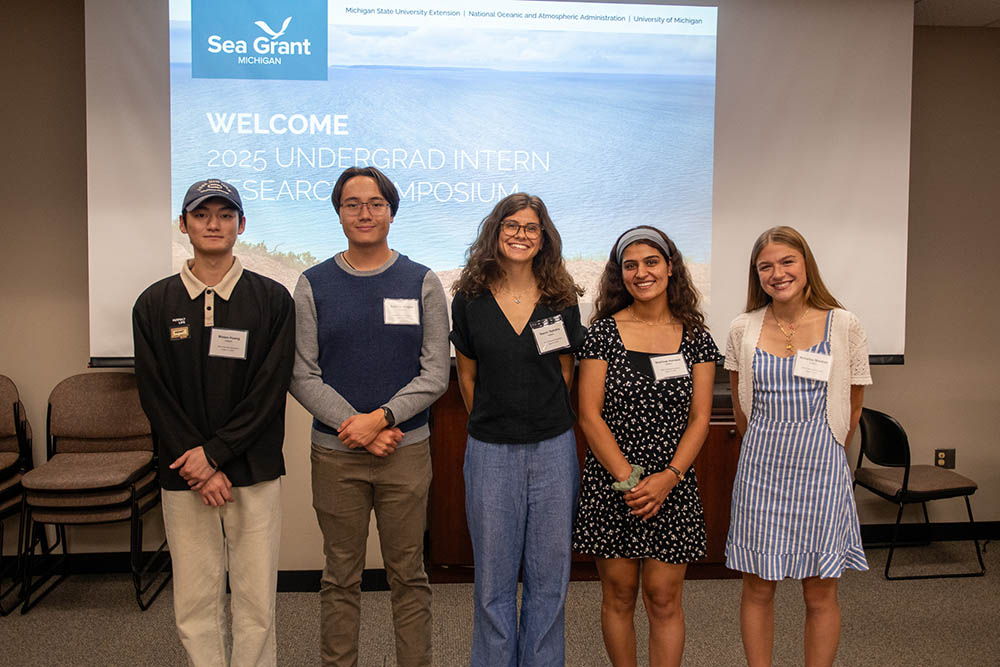
In summer 2025, Michigan Sea Grant (MISG) supported five undergraduate students from three Michigan colleges and universities as part of its environmental internship program. In mid-August, the interns presented a summary of their work to MISG staff and project mentors during a symposium in East Lansing.
The 2025 interns worked with partners like the Michigan Department of Natural Resources and the Clinton River Watershed Council to strengthen and expand ongoing stewardship and research projects. Watch the 2025 internship symposium recording or read on to learn about their summer work.
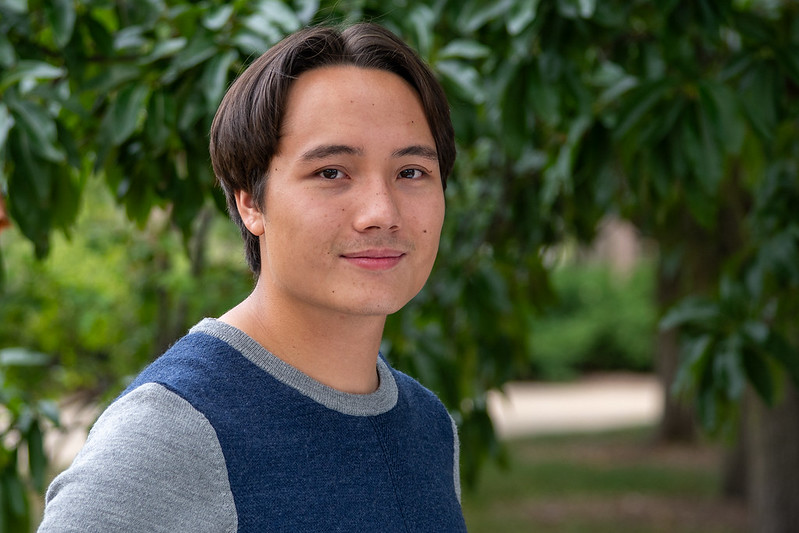
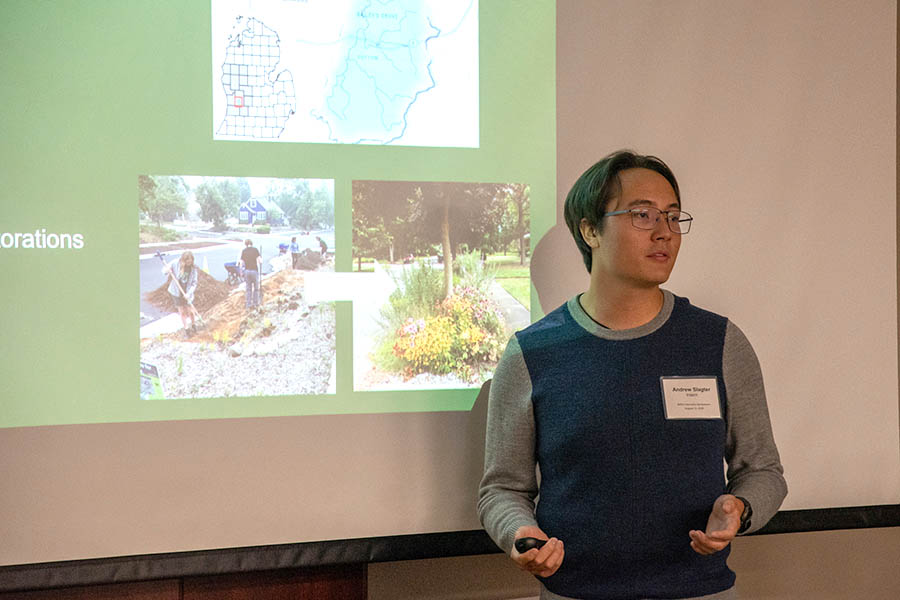
Andrew Slagter, one of three interns from Calvin University in Grand Rapids, partnered with Plaster Creek Stewards (PCS), a watershed restoration initiative working to improve the heavily degraded Plaster Creek in West Michigan using rain gardens and other green infrastructure projects that use native plants to help capture stormwater, filter contaminants, stabilize eroding streambanks, rebuild damaged habitats, and boost community well-being. Monitoring these restored areas over time helps PCS gauge the efficacy of their installations and refine their approach for the future.
Andrew spent the summer assessing the biodiversity of insects, birds, and small mammals living in restored areas of green infrastructure projects in the Plaster Creek watershed. He assessed three sites that had been restored in 2019, 2020, and 2022, along with a control site that is slated for future restoration. Although Andrew is still analyzing the data, an initial inventory tallied at least 96 species living in the restored sites. He noted a sizable population of Canada geese in the lawns of the unrestored site and none at the restored sites, suggesting that green infrastructure might help deter nuisance species.
Andrew underscored the importance of researching and preserving biodiversity in urban settings. “This is an increasing concern that we’re going to have to pay attention to,” he said. “With many of these insects being key pollinators that also pollinate things like our crops… It’s important to understand the role of green spaces and the potential to integrate them into urban development.”
He also reflected on the less tangible benefits of green infrastructure and restoration work: “It’s really easy to focus on the numbers… But there were so many mornings where I would walk into these sites and see the sun rising and the sun rays hitting the native plants and the dew, and there was just such an immense sense of peace and happiness… I hope that as we understand the role of green infrastructure more and hopefully implement it into urban environments that otherwise wouldn’t have this space for people to use and share with wildlife in the future, that we would begin to value our shared spaces more.”

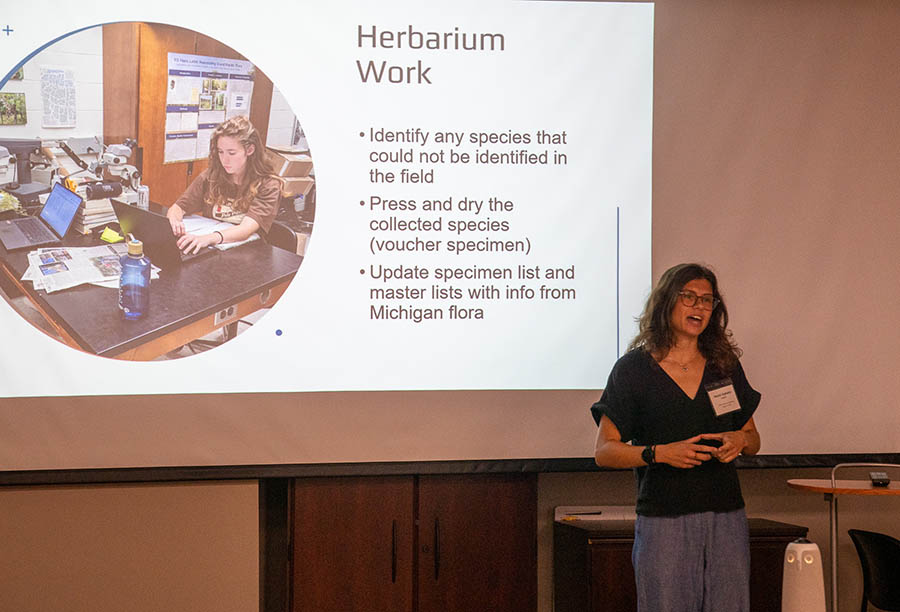
Naomi Dykstra, also a student at Calvin University, teamed up with the City of Grand Rapids Parks and Recreation Department for her summer work. She joined an ongoing effort called the “Emma Cole Project 2025,” which revisits the places originally cataloged by Grand Rapids teacher and botanist Emma Cole in the late 1800s and early 1900s.
Naomi completed a botanical inventory of eight Grand Rapids city parks to paint a picture of their overall habitat quality. She documented each plant through the iNaturalist app, which enables users to publicly log encounters with plant and animal species and get help with tricky identifications. She also collected samples of flowering or fruiting species and prepared them to be archived in Calvin’s herbarium, or plant library. Naomi used these inventories to run a series of calculations called a “floristic quality assessment” (FQA) on each site. FQA scores can help identify sites with disturbed or lower-quality habitats, average habitats, or high-quality habitats worthy of conservation.
So far, Aman Park west of Grand Rapids had the highest FQA score among the sites Naomi sampled, thanks to its varied habitat types and history of management that avoided intensive farming. Most of the other sites received average FQA scores and could benefit from restoration activities that encourage species diversity. Naomi’s results will help the parks department prioritize their management efforts to strengthen Grand Rapids’ urban park habitats.
Noami came away with a new appreciation for the ecology of urban parks. She also enjoyed interacting with onlookers in the field. “The people in the parks get really curious about what we’re doing,” she recalled. “So we get to explain, ‘Oh, this is what an invasive plant looks like. This is a native plant.’ And there’s a lot of joy. People really care about their parks.”
While Naomi is still gauging her next steps, she said, “This project helped cement in my mind that I really like the collaboration between environmental science and connecting with the community.”
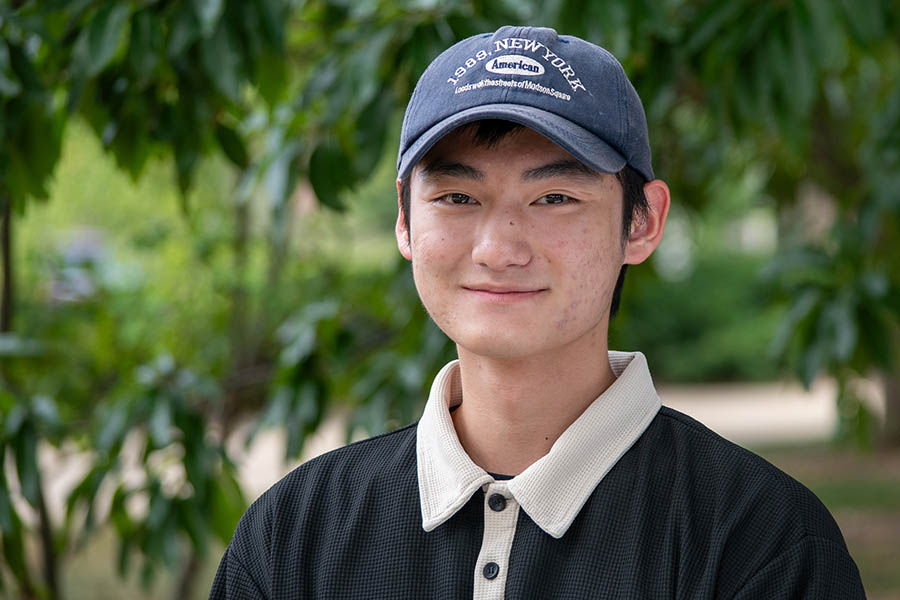
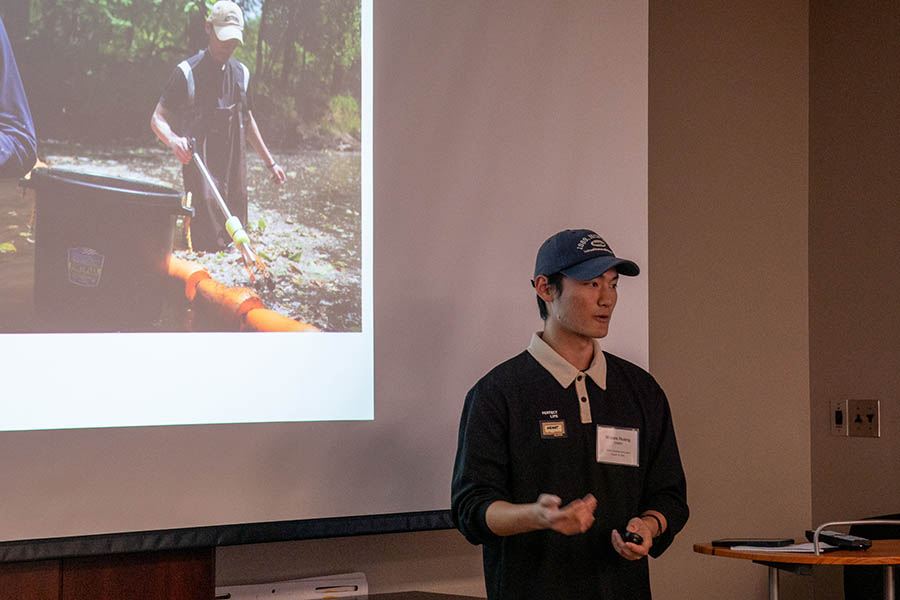
Moses Huang, the third Calvin University student in the cohort, also worked with Plaster Creek Stewards. Moses worked with a “Litter Boom” device that creates a barrier across the surface of a creek or river. The boom catches floating garbage and allows water to pass through. Moses’ summer project aimed to see if the Litter Boom could trap meaningful amounts of litter, a potential strategy for preventing debris from reaching the Grand River and, eventually, Lake Michigan. Moses set out to capture, categorize, and measure litter trapped by the boom in different locations along the creek’s run. However, he repeatedly ran into complications from natural log jams that acted as highly effective litter-catching barriers. While this affected his ability to gauge the Litter Boom’s effect, Moses was still able to capture and catalog the debris — largely plastic litter — snagged by the log jams and boom.
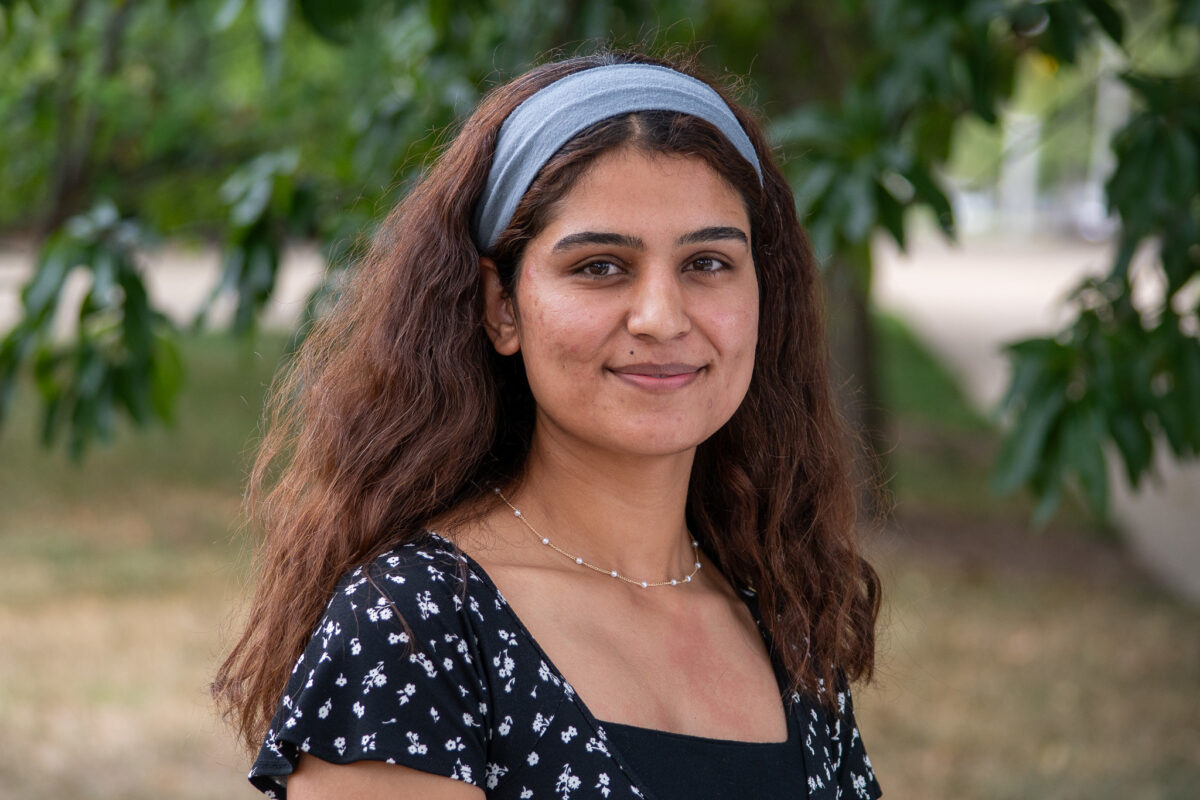
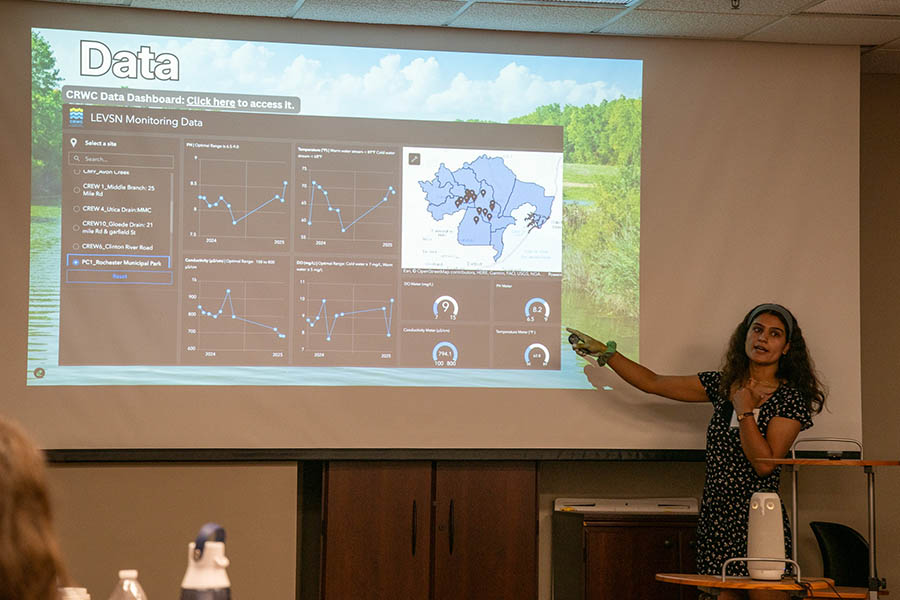
The fourth presenter, Shehnaz Hameed, a recent graduate of Grand Valley State University, spent the summer as a citizen science intern with the Clinton River Watershed Council (CRWC). This southeast Michigan organization helps monitor and restore the Clinton River, which flows through a highly populated watershed north of Detroit and has a legacy of pollution challenges. Shehnaz helped CRWC expand their existing volunteer monitoring programs and create a data dashboard that’s accessible to the public and can be used to support broader research and restoration projects.
Among other programs, CRWC participates in and helps coordinate the Lake Erie Volunteer Science Network (LEVSN). This regional participatory science program empowers community members to collect, share, and engage with water quality data. Volunteers visit monitoring sites and use simple sensors to collect data for LEVSN’s regional water quality benchmarks of dissolved oxygen, pH, temperature, and conductivity. Shehnaz created a new data dashboard that shows how the sampling results compare to safe or ideal ranges for each characteristic. Shehnaz’s analysis also crystallized a clear trend in the Clinton River data: high conductivity levels across most samples at most sites. High conductivity can be a sign of excess salt in water, likely washed in from icy winter roads, parking lots, and sidewalks. CRWC and partner organizations may be able to use the data to shape community behaviors around salt use to better balance safety and water quality.
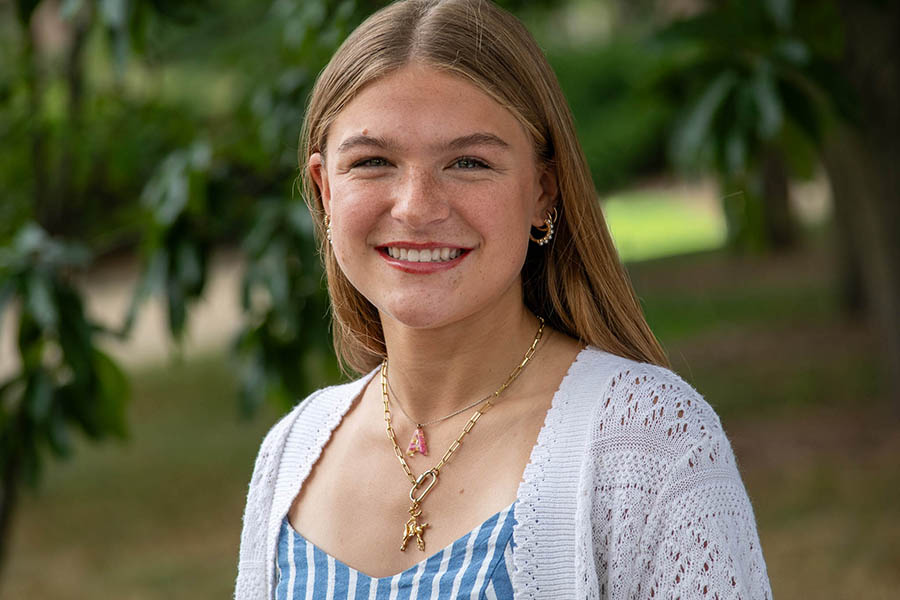
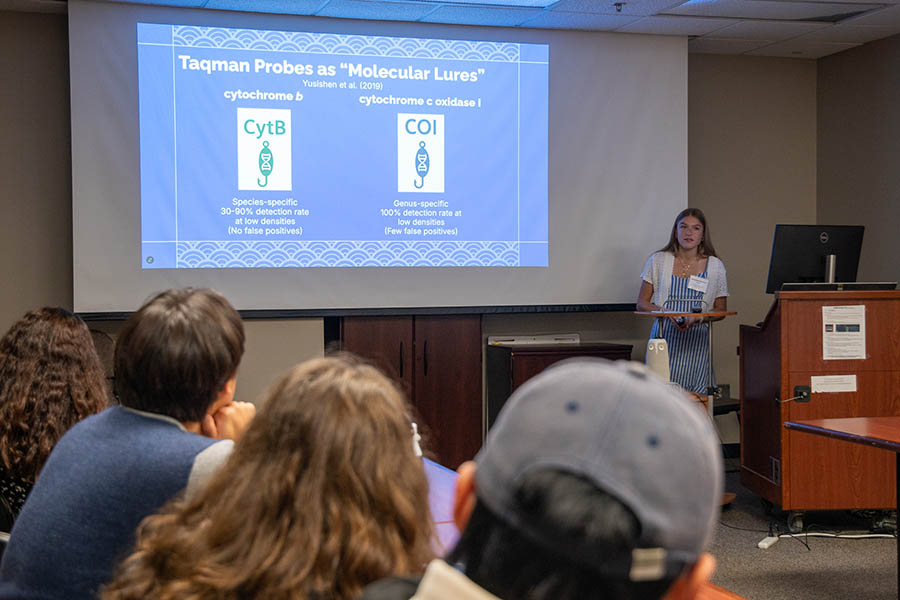
Annie Waldron, from Hope College, worked with Michigan Department of Natural Resources project to monitor lake sturgeon by detecting traces of their DNA – a technique called “environmental DNA” or eDNA – in the Kalamazoo River and other nearby waterways. Populations of these once-numerous native fish are starting to rebound thanks to habitat restoration and river stocking programs. Lake sturgeon are solitary and long-lived and spend years in the Great Lakes before returning to inland waters like the Kalamazoo River to spawn. Techniques like eDNA could simplify long-term population monitoring by allowing researchers to trace lake sturgeon activity from a water sample.
Annie and her mentor, Dr. Jimena Golcher-Benavides, collected and analyzed weekly water samples from multiple locations along the Kalamazoo River. Their results are promising: eDNA techniques successfully detected the presence of lake sturgeon in the Kalamazoo River. The samples even accurately reflected a spike in eDNA after sturgeon were observed spawning in the spring.
Annie finished her summer’s work with a new passion for aquatic ecology. “This research wouldn’t have been possible without Michigan Sea Grant,” she said. “It helped continue to fuel the passion I’ve had my whole life for nature, conservation, and protecting and caring for our earth. Focusing on the water side of it, and the fish, isn’t something I’d really considered until joining this lab… I’ve grown very fond of aquatics, specifically lake sturgeon and other freshwater fish. So I think I may be focusing more into the freshwater ecology side of things.”
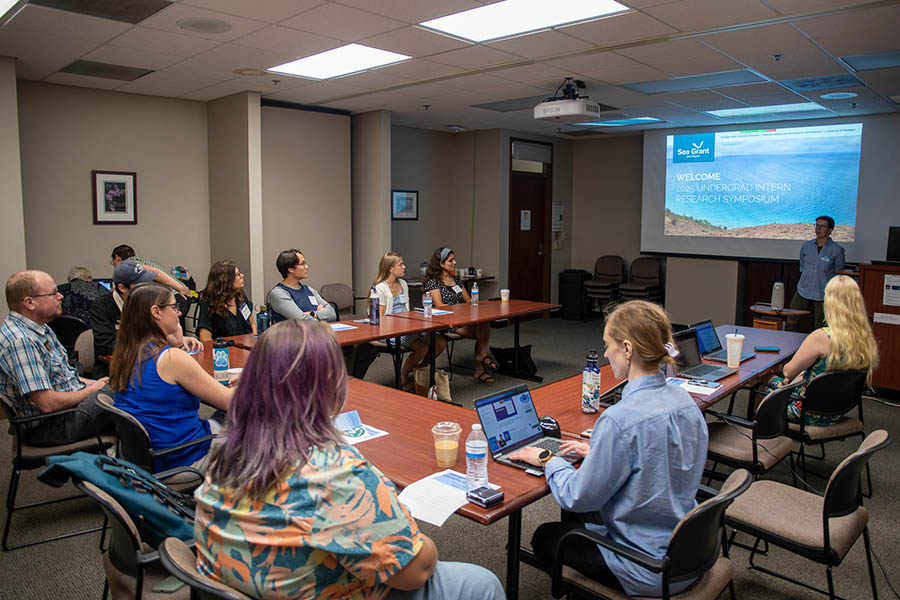
Dr. Dave Warners, a biology professor at Calvin University and mentor to multiple interns, summed up the symposium with a comment of gratitude: “We are so grateful for everything Michigan Sea Grant does for these students. What a fantastic program to have the chance to be part of!”
MISG’s undergraduate internship program coordinates and funds students in Michigan to work with private businesses, government agencies, or environmental non-profit organizations to plan or implement environmental stewardship projects in the Great Lakes. Since launching in 2019, MISG’s program has grown to be the largest internship program offered across the national Sea Grant network. The MISG internship program is funded in part by the Michael Fraker Student Research Memorial Fund, which honors a former MISG research program manager and his commitment to mentoring the next generation of Great Lakes scientists. Consider donating to support future interns.