When disaster strikes, will we be ready to meet it?
For folks in northern Michigan, the answer just might be “yes.”
In August 2025, Michigan Sea Grant participated in a table-top exercise that explored how emergency responders might address a hypothetical oil spill in the Upper Peninsula. Planning for a swift, safe response to an oil spill is a complex process involving hundreds of people from dozens of agencies and companies thinking through emergency scenarios in different locations and weather conditions. Agencies keep plans on hand that detail who will do what, when, and where, ready to deploy on the day they’re needed.
MISG joined the exercise as an observer on behalf of the Sea Grant-led Hazardous Material Transport Outreach Network (HazMaTON), to see what disaster planning looks like behind the scenes. While Michigan Sea Grant may not be on the front lines of future hazardous material spills, we and the other members of HazMaTON work to reduce risk from spills, educate professionals on the latest science and technology related to hazardous material transport, and give communities a sense of what to expect if a spill happens in their area.
In the UP, the Northern Michigan Area Committee (NMAC) leads the work of disaster planning. This group of representatives includes staff from a broad range of organizations who might be involved in responding to an oil spill or other hazardous material accident. The committee covers most of the central and eastern UP and a large portion of the northern Lower Peninsula. The NMAC has a federal mandate to develop worst-case scenario plans for responding to and remediating hazardous material spills.
Table-top exercises provide a way to stress-test those plans. NMAC organizers develop what-if scenarios, and the people who might respond to a real-life emergency talk through the plan to look for gaps and weak points.
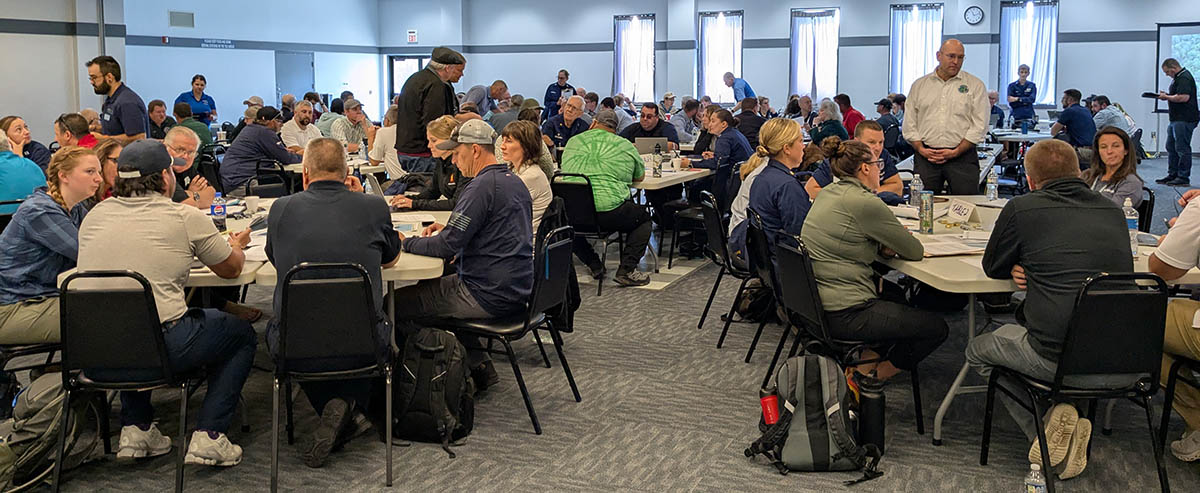
At the August 2025 exercise, about 130 people gathered in the Little Bear Community Center in St. Ignace to discuss a scenario designed by the U.S. Coast Guard Sector Northern Great Lakes and Enbridge Energy. The scenario: A hiker has reported an oil leak from a stretch of Enbridge pipeline damaged by an uprooted tree. The oil is now traveling along the Cut River toward Lake Michigan. What happens next?
The set-up sparked a fascinating discussion among professionals from almost 50 federal, state, tribal, county, and city agencies, contractors, and non-profits. Here are three takeaways from the day:
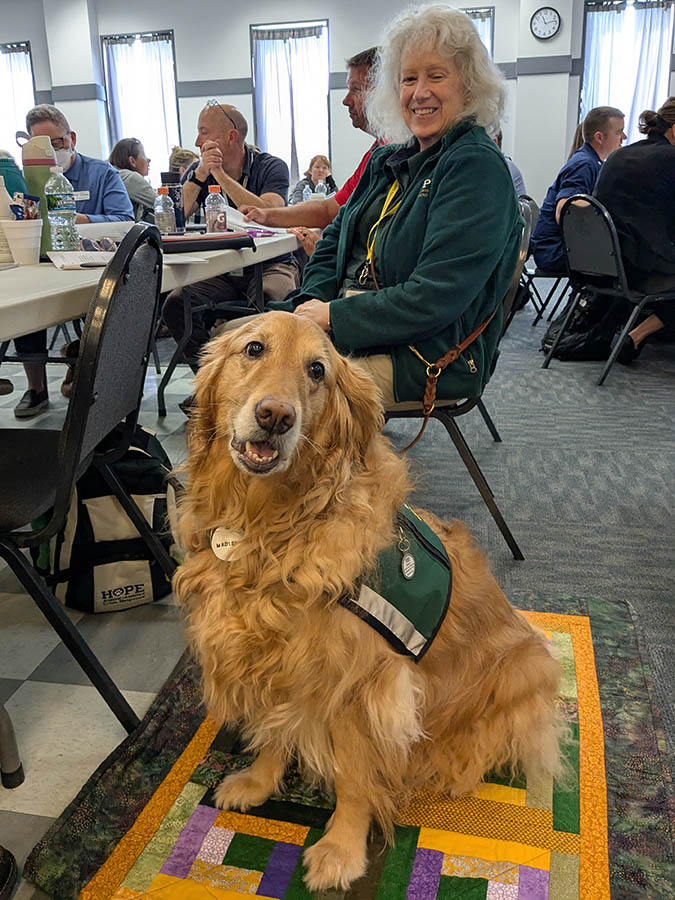
Therapy dog Madison and her human handler Keena represented HOPE Animal-Assisted Crisis Response at the table-top exercise.
An oil spill needs all hands on deck
Every organization in the NMAC has a vested interest in keeping people, animals, and habitats safe and healthy. As soon as the warning call goes out, hundreds of people from dozens of agencies spring into action. Federal agencies like the U.S. Environmental Protection Agency, U.S. Coast Guard, and National Oceanic and Atmospheric Administration join forces with the Michigan Department of Natural Resources, Michigan State Police, and other state agencies. County emergency management, health, and fire departments team up with tribal emergency and natural resources departments. Marine salvage contractors and drone operators work alongside conservation districts and animal rehabilitation groups. A crisis response organization might even arrive with therapy dogs to help stressed personnel decompress.
Thanks to existing agreements and federal structures like the National Response System, each group knows where it fits into the decision-making hierarchy. The U.S. Coast Guard and Enbridge spearheaded the Cut River table-top exercise because they’d also be at the heart of a real-world disaster response. The U.S. Coast Guard is tasked with handling spills in coastal waters; for spills in inland waters, like rivers or smaller lakes, the U.S. Environmental Protection Agency steps in. As the owner and operator of the infrastructure that released the spill, Enbridge would be held as the “Responsible Party,” a formal role spelled out in federal safety planning. They would join representatives from specific federal, state, and local entities to form a command team that would collaborate to tackle the incident and response.
Safety is paramount
One phrase kept cropping up: “life safety.” The top priority in any emergency response is keeping people — bystanders, residents, and emergency responders alike — safe and well. Within that mandate, highly-trained personnel work as hard as they can to stabilize the situation, remove or neutralize the spilled material, and protect the environment.
A decent amount of disaster planning goes into keeping bystanders at bay. In the Cut River scenario, emergency responders had to anticipate rubber-neckers in boats and cars, tourist traffic trying to pass on crowded roads, well-meaning neighbors approaching with offers of help, and other involvement from the public. Even bystanders with the best intentions could be the distraction that puts a first responder in danger — not to mention jeopardizing their own safety.
Bystanders should always follow guidelines from the professionals on site, keep their distance, leave the area if possible, and stay home or evacuate as per official recommendations. Those interested in helping can look for an off-site volunteer station that’s coordinating donations and aid to support first responders and affected community members.
Creature comforts aren’t a luxury – they’re a necessity
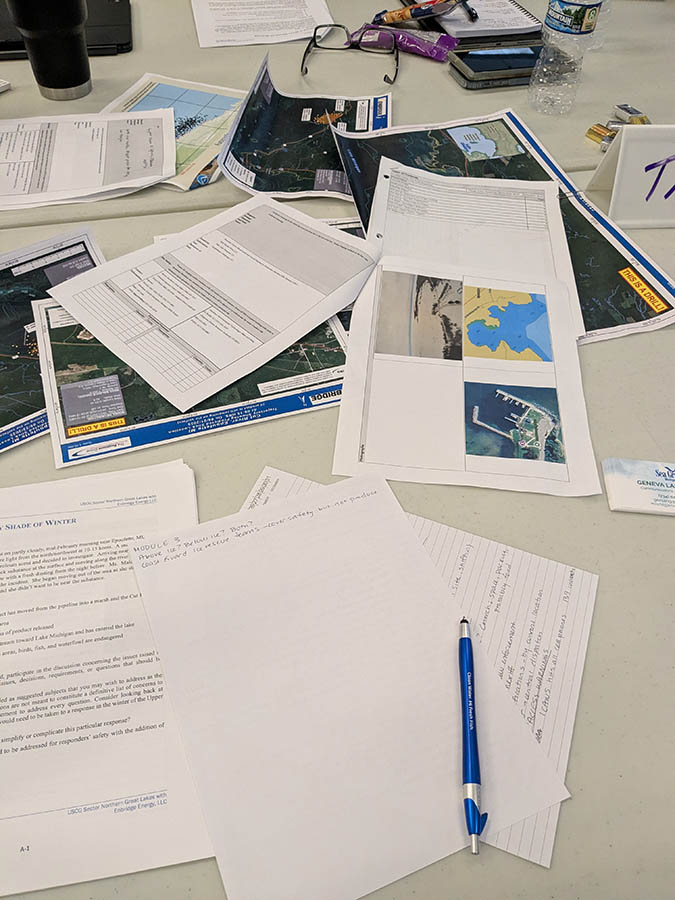
Nobody can predict exactly where an incident will occur until it’s already happening. Responding organizations must be ready to shuffle hundreds of people to the site, no matter how remote or inhospitable the conditions may be. Some people need to be stationed directly at the spill site, while others can work from staging areas miles away. They might face snow, icy temperatures, scorching sun, or mud and rain, and may need to stay for weeks or even months.
And all of these people need to eat, sleep, do laundry, use Wi-Fi, clean their equipment, save receipts, and decompress after stressful shifts. Logistics questions become critical:
- Who will bring meals and water to the first responders?
- How many hotel rooms are available for everyone who needs to stay nearby?
- How can people get here if weather shuts down the Mackinac Bridge?
- Where do we direct local residents who want to help?
- Who can approve purchases of food and equipment?
Some of the challenges can be worked out in advance, thanks to planning exercises like this:
- I’ll get an updated phone number for that county emergency management employee.
- Let’s sign an agreement with this church to use their building as a potential staging area.
- I know someone who owns that hotel. I’ll ask about their options for re-opening during the off-season.
Communities affected by a spill may need to open their doors to a flood of strangers, complicating an already stressful time. But thoughtful planning and meaningful community relationships can help agencies hit the ground running to spin up a safe, efficient, and effective spill response.
Learn more about hazardous material spills, prevention, and response in the Great Lakes region at hazmaton.org.