From oil-detecting dogs to Great Lakes vessels powered by lithium batteries, the 2025 HazMaTON summer webinar series covered some fascinating ground. The annual series provides free, publicly available webinars that provide the latest research and resources to inform decision-making around the complex issue of hazardous material transportation.
Michigan Sea Grant is an active member of the HazMaTON collaborative, which is led by Minnesota Sea Grant and includes representatives from each Great Lakes Sea Grant program. Michigan Sea Grant and other HazMaTON members work to reduce risk from spills, educate professionals on the latest science and technology related to hazardous material transport, and give communities a sense of what to expect if a spill happens in their area
Catch up on the two webinars presented during the 2025 summer series:
Expanding the Use of Oil Detection Canines to Detect Oils Submerged Under Freshwater (August 6, 2025)
Poppy is a five-year-old English Springer Spaniel with a nose trained to detect oil spills. But can she sniff out oil after it sinks to the bottom of a lake? Researchers at the International Institute for Sustainable Development-Experimental Lakes Area (IISD-ELA) in Ontario, Canada, put Poppy’s nose to the test in a field study covered in this webinar by IISD-ELA head scientist Vince Palace.
- Presenter: Vince Palace, head scientist, International Institute for Sustainable Development’s Experimental Lakes Area
- Watch on YouTube.
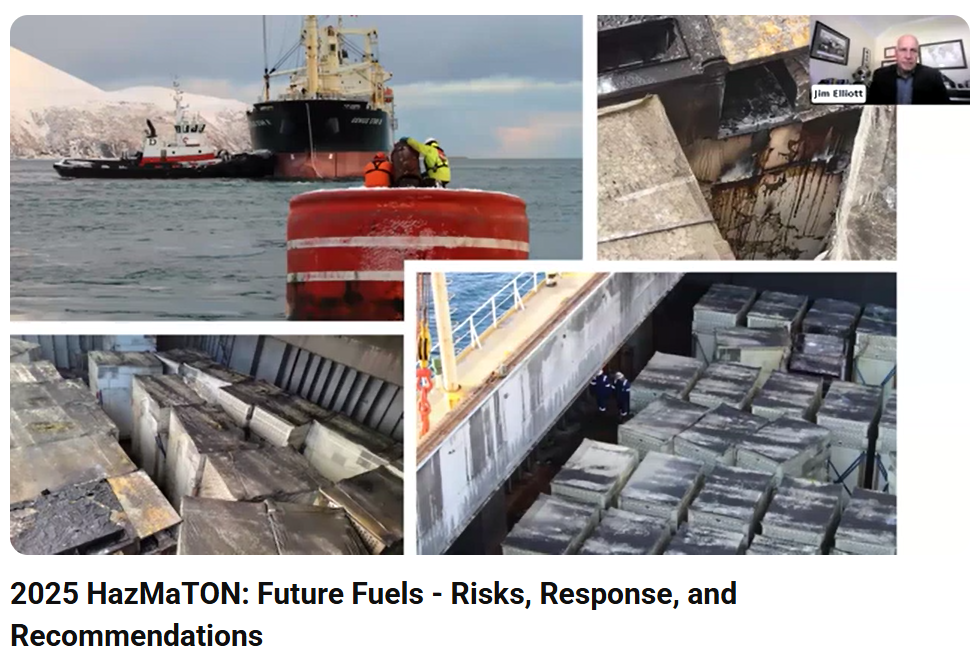
Future Fuels: Risks, Response, and Recommendations (July 16, 2025)
Ship owners and operators continue to seek alternative (“future”) fuels to power their fleets while reducing vessel emissions. Lithium batteries now power tugs and ferries. Future fuels include liquified natural gas, methanol, ammonia, hydrogen, biofuels, and others, such as nuclear energy. Presenter Jim Elliott, Chief Operation Officer for T&T Group of Companies, describes alternative fuels’ unique opportunities, risks, and challenges. He shares recommendations for reducing risks to the environment, the maritime transportation system, and marine casualty responders.
- Presenter: Jim Elliott, chief operating officer, T&T Group of Companies
- Watch on YouTube.
Highlights from the archive
Introduction to Tribal Spill Response Programs (October 23, 2023)
Hazardous material spills don’t stop at geographic boundaries. When a significant spill occurs, many organizations, including tribal, federal, state, and provincial governments, play a part in response and clean-up. Coordinated response planning is crucial, and as sovereign nations, tribes have the authority to engage in spill preparedness and response activities to serve their communities. In this webinar, a panel of presenters provide an overview of three tribal spill response programs in the United States Region 5 Regional Response Team (RRT5).
- Panel presenters:
- Courtney Hessell, environmental services coordinator, Grand Traverse Band of Ottawa and Chippewa Indians.
- Traven Michaels, environmental response specialist, Little Traverse Bay Bands of Odawa Indians.
- Jesse Wesolek, air quality and environmental response specialist, Bay Mills Indian Community.
- Watch on YouTube
Marine Firefighting: Preventing Environmental Threats While Saving Lives and Property (July 26, 2023)
Emergency response is already complicated, but responding to fires and other emergencies on the water is another kind of challenge. Presenter Jim Elliott, Chief Operation Officer for T&T Group of Companies, provides an overview of salvage and marine firefighting services, covering topics like regulation, incident command, and Great Lakes case studies.
- Presenter: Jim Elliott, chief operating officer, T&T Group of Companies
- Watch on YouTube