
As climate change warms lakes and rivers, many fish species face growing challenges. Understanding which fish are most vulnerable—and why—is essential for protecting ecosystems and fisheries. A recent study by a Michigan Sea Grant graduate research fellow examined how different populations of walleye, a cool-water fish important both ecologically and economically, respond to rising water temperatures.
Rather than treating walleye as a single, uniform species, this research focused on differences within the species. The researchers studied young walleye raised in three hatchery ponds in Michigan, located in different regions and using different broodstock, or parent fish. The goal was to see whether fish from different backgrounds respond differently to warming, and whether those differences matter for survival and management.
In this project, Scott A. Jackson, PhD., University of Michigan, School for Environment and Sustainability, measured fish metabolism, which controls how energy is used for basic survival, growth, swimming, and reproduction. In particular, they looked at “aerobic scope,” a key indicator of how much energy a fish has available beyond basic needs. Fish with a larger aerobic scope generally have greater flexibility to cope with environmental changes, including high temperatures.

The results showed clear differences among the three walleye populations—even though they came from across relatively small geographic distances. Walleye from northern Michigan had higher metabolic performance and were better able to maintain energy availability at warmer temperatures compared to fish from southern populations. Surprisingly, fish from the warmest southern rearing pond were the most negatively affected by high temperatures, contradicting expectations that they would be better adapted to warmth.
These differences likely arise from a mix of factors, including genetics, early life conditions in hatchery ponds, and the fish’s ability to adjust (or acclimate) to warmer temperatures over time. When fish were exposed to higher temperatures for several weeks, all populations showed some ability to adjust their metabolism. However, the northern fish still maintained higher aerobic scope compared to the southern populations, suggesting long-lasting differences that short-term acclimation cannot fully overcome.
The results indicate northern walleye may be more tolerant of acute and chronic exposure to higher temperatures by being able to maintain a higher aerobic scope than more southern populations. In addition, even over small geographic distances, populations can have significantly different physiological responses to environmental stressors. Quantifying variation in population-specific metabolic responses can inform predictions of growth, reproduction, and fitness across a species range and clarify the importance of within-species diversity in determining vulnerability to environmental stressors.
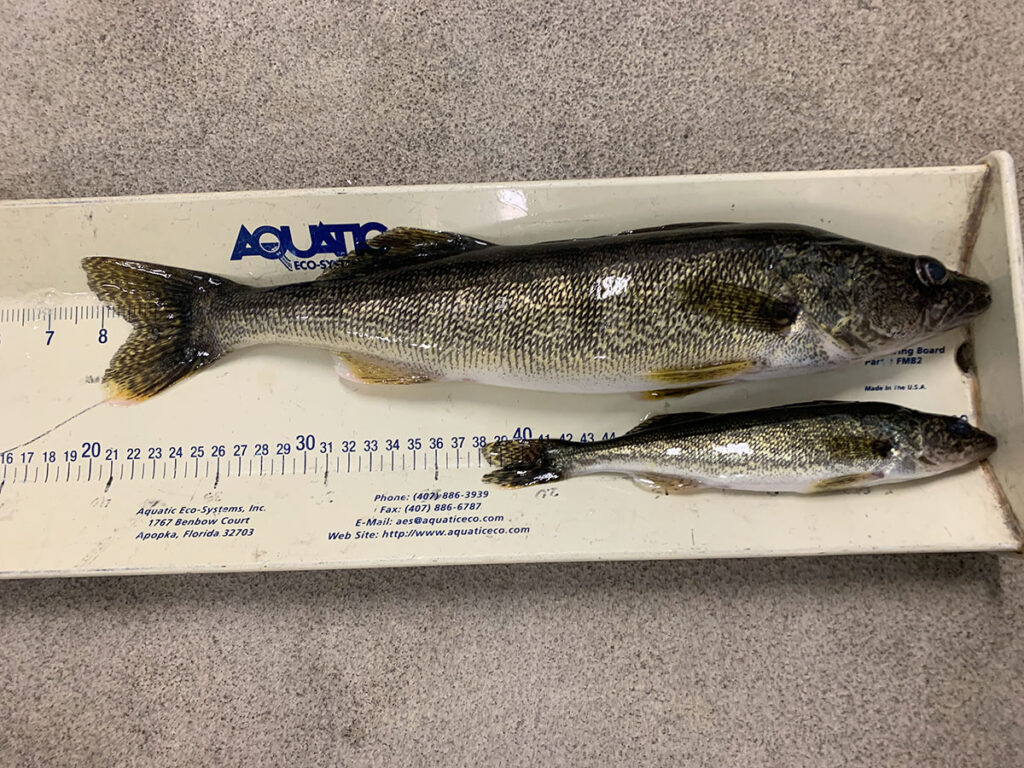
The findings have important implications for fisheries management. Many agencies stock hatchery-raised walleye to support declining populations, especially in warming lakes. This study suggests that where fish come from—and how they are raised—can influence how well they cope with climate stress later in life. Managing fish populations without considering these differences could reduce the success of stocking programs.
Understanding variability in physiological responses to climate change is important to more accurately assess species’ vulnerability, predict ecological outcomes, and develop appropriate adaptation strategies. These findings indicate that managers need to not only be aware of a population’s genetic background but also consider the long-term impacts that developmental conditions may have later in life on an individual’s adaptive capacity. For stocking-related management, the effect of rearing ponds’ condition may affect the overall vulnerability of reared groups of individuals and how successful they may be in their transplanted habitats. These findings highlight the importance of maintaining within-species diversity to provide resilience to environmental stressors from climate change. Overall, the research highlights the importance of maintaining diversity within species because different populations may respond differently to changing temperatures, and that variation can act as a form of insurance, increasing the chances that some populations will thrive even as conditions change.