State of the science: Zebra and quagga mussel impacts and control in the Great Lakes
Core Question: How are invasive mussels affecting fish populations in the Great Lakes?
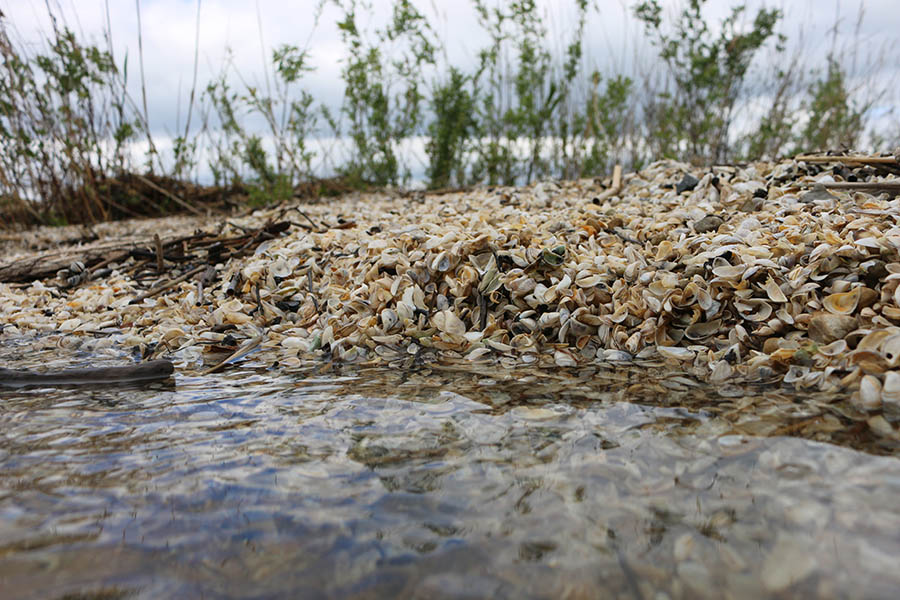
Invasive quagga and zebra mussels (collectively Dreissenids) have been established in the Great Lakes for more than three decades. These species have affected the ecosystem by increasing water clarity, reducing offshore productivity, and altering nutrient cycling and the way energy travels through the food-web. These changes, in turn, have contributed to changes in fish populations. Although plenty of scientific information exists on Dreissenid mussels in the Great Lakes, this information has not been summarized or presented in a way that is accessible to broad audiences.
Fishery managers and sea lamprey control agents receive many questions from the public about Dreissenid mussels. As a result, these managers need accessible communication products to explain the complex interactions among Dreissenid mussels, nutrients, and food webs to help explain management decisions like stocking and population recovery strategies and to help set reasonable expectations for fisheries harvests. Uncertainty around the role of invasive mussels in recent declines in lake whitefish and Diporeia abundance highlights the need for easily digestible narratives that explain ecosystem changes to a broad audience of rightsholders and stakeholders. Additionally, managers may be able to use this information to help with decision making and control and remediation actions.
To address these needs, this project will help bring clarity to existing uncertainties regarding dreissenid mussel impacts, including, for example, uncertainties about underlying mechanisms, inconsistencies across studies, and anecdotal assertions lacking adequate evidence. A key outcome of this project will be to increase the audience’s understanding of how the current state of system productivity relates to fish production. More specifically, information from this project will show how the current reduced state of system productivity cannot support the same level of fishing as a more productive environment. The project will build on existing research on invasive mussels and their role as modifiers of energy and nutrients in the Great Lakes.
While the ecosystem impacts of Dreissenid mussels vary across the Great Lakes basin, this project will focus on a bigger picture assessment of the state of the science.
Contact: Elizabeth Striano, Michigan Sea Grant, [email protected]