
Environmental Internship Host Organizations
Host applications are closed.
Apply to become a 2026 summer intern host!
Submitting projects and hosting interns
Internships run from May to August. MISG provides each selected intern with a $9,000 stipend, up to $1,000 in travel support, and regular professional development opportunities through the summer. The host organization is responsible for supervising the intern and providing a 50% non-federal match (which can be in-kind contributions such as staff time, office space, etc). For potential federal hosts, we’ll need an attestation that the 50% matching funds (in-kind included) come from a non-federal source.
From November 3-December 5, 2025, we invite potential host organizations to submit ideas for projects that could engage these bright students in environmental stewardship work for Summer 2026. We will collect the proposed projects and include them in our application guidance documents, which will be available to student applicants in early December. Potential interns interested in selecting your project will contact you to collaborate on their application materials before the January 31, 2026 application deadline.
We anticipate funding a limited number of students in 2026, so not all host-submitted projects included in the guidance documents will be filled by an intern in 2026. As needed, we will contact potential hosts to discuss or refine submitted projects before including them in the guidance documents. Hosts are welcome to apply again each year you have a project, but it may be less likely to receive funding in back-to-back years.
In 2026, thanks to a new funding partnership with the NASA Michigan Space Grant Consortium, we anticipate supporting one to three additional student interns from the pool of applicants. Students who are co-funded by Space Grant will work on the same type of Great Lakes stewardship and research projects as other Michigan Sea Grant interns.
Examples of host organizations include:
- State agencies, such as Michigan Department of Natural Resources (MDNR) or Michigan Department of Environment, Great Lakes, and Energy (EGLE)
- Parks and recreation departments
- Watershed or river protection groups
- Tribal natural resources departments
- Museums, libraries, nature centers
Previous interns have worked on projects like:
- Partnering with a southeast Michigan watershed group to run and improve their hands-on stream sampling program for K-12 students.
- Mapping tree canopy cover in an urban forest in Detroit.
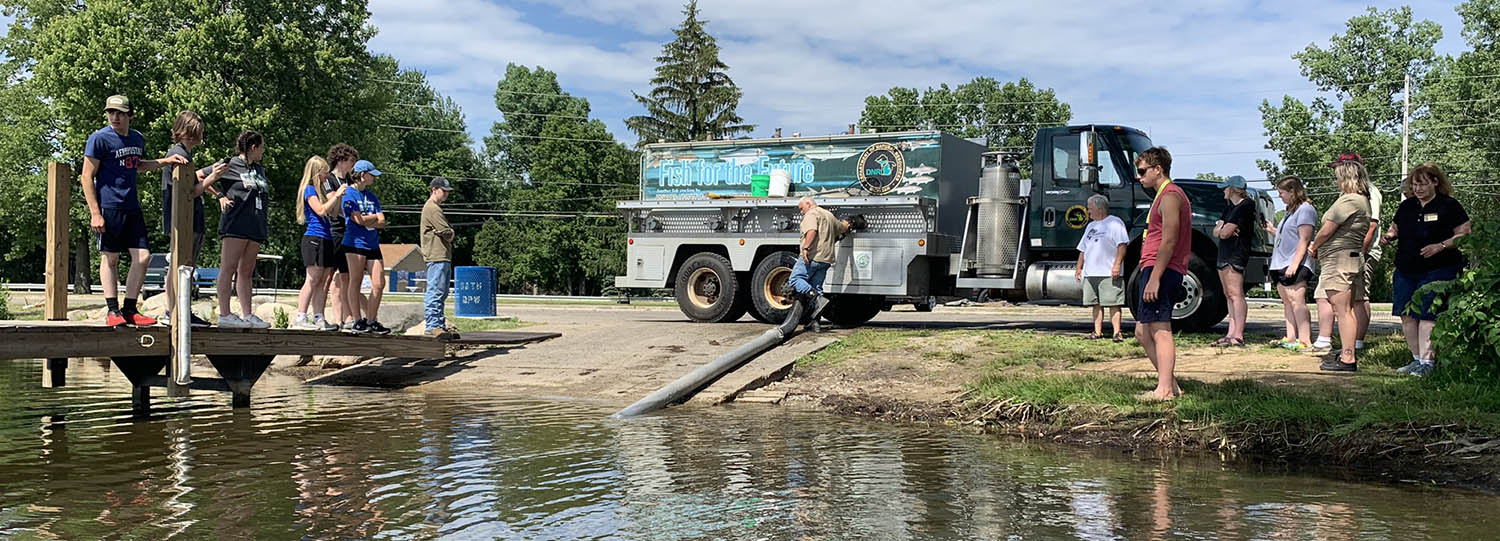
- Helping Michigan DNR stock and study juvenile lake whitefish in northern Michigan lakes and rivers.
- Setting up experiments to track the spread of invasive algae.
- Engaging visitors at a fish hatchery and crafting newsletters and program documents.
Project submission form and contact
Applications are closed. They will repoen in the fall 2026 for the internship in the summer of 2027.
If you have questions, please email us at [email protected].
If helpful, here’s a checklist and downloadable flow chart (below) to help guide you through the project submission process.
Here is our Student Opportunities flyer for sharing: 2026 Environmental Internships flyer (PDF)
Loading Viewer...
2026 internship timeline
- November 3-December 5, 2024: Host organizations submit ideas for intern projects; MISG incorporates the projects into our application documents for interested students.
- December 10, 2025- January 31, 2026: Application window for students is open.
- February: MISG coordinates a peer-reviewed process to select the 2026 interns.
- March: Selection decisions are announced.
- May: MISG hosts a kick-off meeting with interns, and their projects begin.
- August: Intern projects conclude; MISG hosts a closing symposium for interns to present about their projects. Intern final reports and sponsor wrap up surveys are due.