By Emily Stuller, 2026 Knauss Fellow
Editor’s note: Emily Stuller was selected for the 2026-27 Knauss Marine Policy Fellowship, run by the National Sea Grant College Program. Read more about the fellowship.
Q. Tell us a little about yourself!
 I’m originally from Grand Rapids, Michigan, and I credit my love for nature, especially water, to growing up so close to THE most beautiful freshwater system in the world. Living near Lake Michigan often felt like living by the ocean, and that early connection shaped the path I would eventually follow. As much as I loved my home state, I was eager to study Marine Science and wanted to make sure to get hands-on experience, so I decided to move to Florida for my undergraduate studies at Florida Gulf Coast University (FGCU).
During my time at FGCU, I had the opportunity to work in my professor’s marine geochemistry lab focusing on a range of water quality topics in Southwest Florida. After graduation, I moved even further south to Key Largo, FL, to work at the environmental education nonprofit, MarineLab, serving as the Data Specialist/ Citizen Science Coordinator and a Marine Science Instructor. There, I spent my days on the water educating K-12 students, college students, and adults, while also getting to collect data for local, state, and federal partners.
All of these experiences really showed me firsthand the value of applied science and communication and sparked my curiosity in better understanding how science operates within the broader system, particularly policy and business, to effect change. That interest led me back to my home state to pursue my master’s at the University of Michigan School for Environment and Sustainability (SEAS).
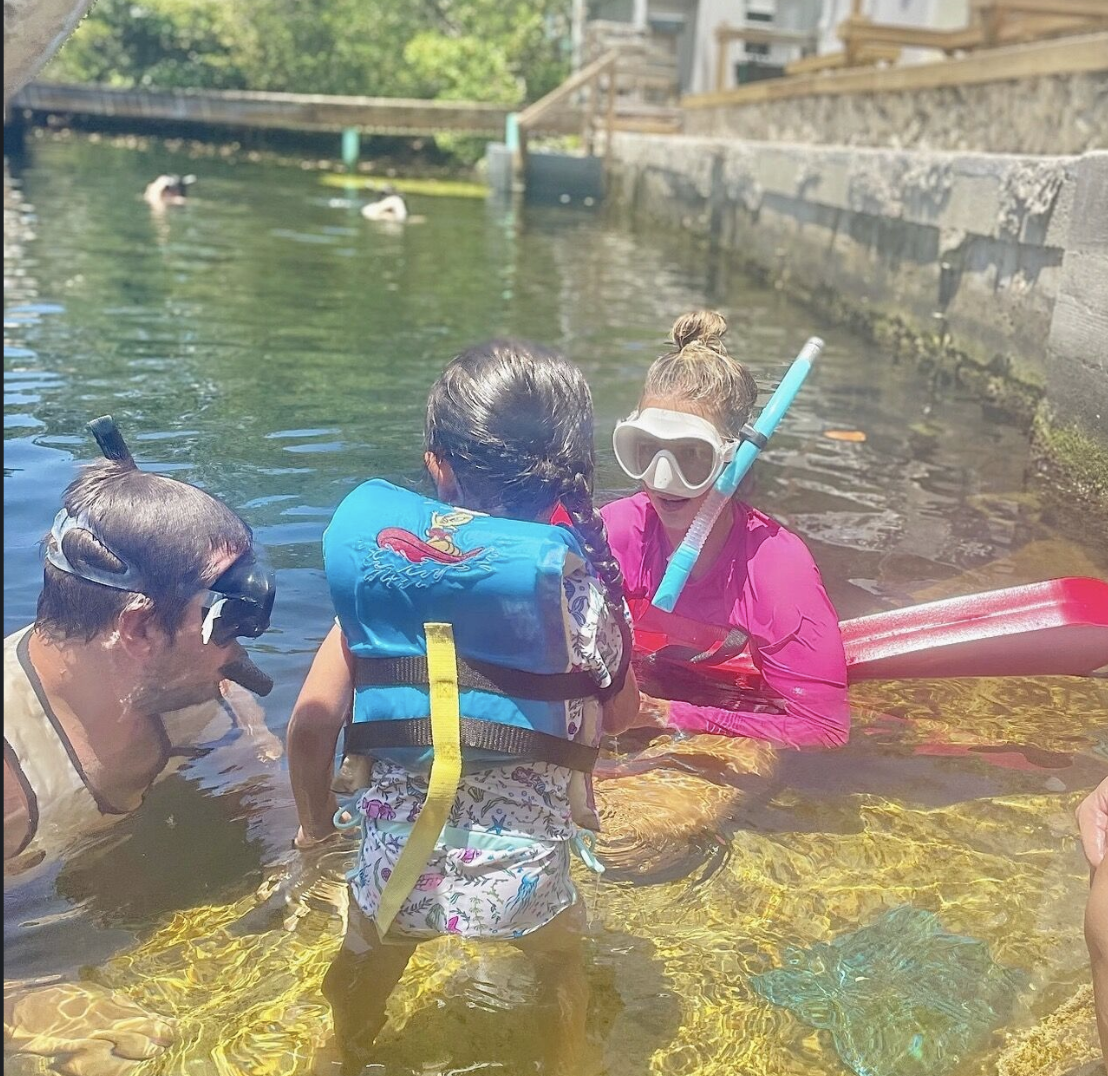
Emily working with kids during her time with MarineLab in Key Largo, Florida. Photo: Emily Stuller
Q. What sparked your interest in your current career path?
Growing up where I did, along with the values my parents instilled in me to stay curious and respect the natural world, are always my anchor points. I was fortunate to visit some marine ecosystems in my childhood and I was immediately fascinated by their beauty and complexity. I was drawn to how much we still didn’t know about these ecosystems and how intricate these marine systems are to function and sustain life. That sense of curiosity stayed with me through my primary and secondary school years, and when it came time to “officially” choose what I wanted to study, I didn’t have to give it a second thought. Over time, it has evolved into a desire to not only study these ecosystems but be a part of the work many dedicated people are doing to protect them through informed decision-making.
While this career path is not always easy, I know it is a purposeful one, one that younger Emily would have dreamed of and been incredibly proud of. When the work feels challenging, I often return to a beautifully posed question by poet Mary Oliver: “Tell me, what is it you plan to do with your one wild and precious life?” It’s a question I hope to keep answering through a career path that is intentional, meaningful, and always rooted in care for the natural world.
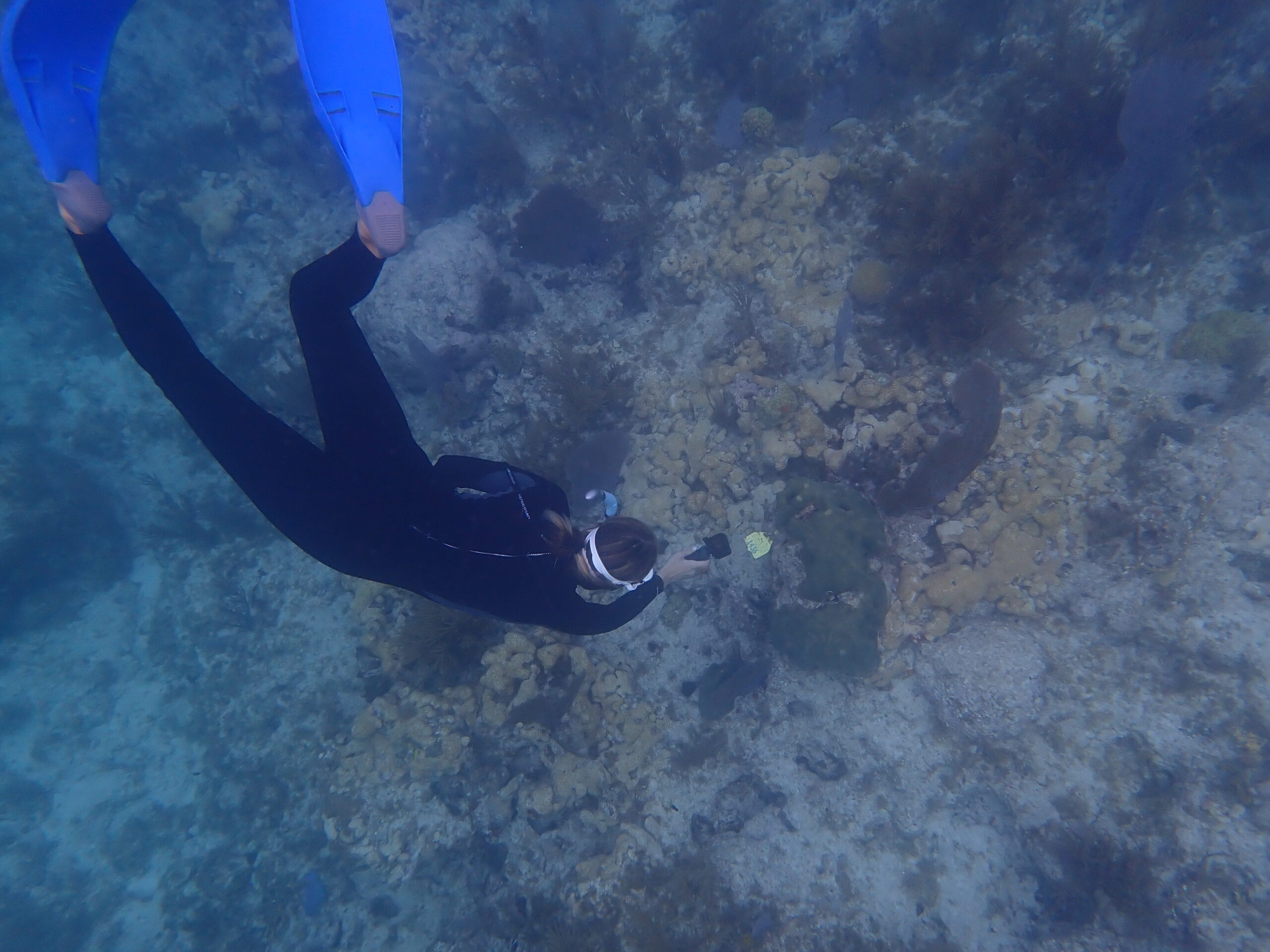
Emily collecting data while working at MarineLab in Key Largo, Florida. Photo: Emily Stuller
Q. What got you interested in the Knauss fellowship?
I’ve heard about the Knauss Fellowship for a while and it always stood out as an incredible opportunity to engage at the federal level, something I have always dreamed of but didn’t think would be feasible early on in my career. What stuck out to me was the fellowship’s emphasis on giving fellows firsthand experience in how science and policy interact at the national level. I decided to pursue my master’s for this reason: to better understand how scientific research informs decision-making, and the broader levers at play, including policy, governance, and commerce, that shape outcomes. I became increasingly interested in where gaps exist between science and action, and how those gaps can be bridged. The Knauss Fellowship was the perfect fit for this next step in my journey. It offers the chance to not only better understand these complex systems firsthand but also contribute to bridging the gap.
Q. What are some experiences and lessons you’re hoping to gain during your fellowship year?
During my fellowship year, I am really looking forward to being a sponge and soaking up as much as I can. I hope to get a better sense of how things work at the federal level like how decisions are made, how policies take shape, and how science is used to inform those choices. I’m especially curious about the often messy but important intersections between science and policy, and how research is translated into actionable recommendations. I also look forward to continuing to develop skills like effective science communication and problem-solving abilities. Beyond that, I’m excited to meet and learn from scientists, policymakers, organization leaders, and other fellows. I’m really grateful for this opportunity and eager to make the most of this year!
Q. What do you do to relax and recharge?
I love exploring my home state and finding new trails along the coastline, especially when I can bring my tiny dog, Zoey, along with me. Lately, I’ve been especially intentional about soaking up my time in Michigan before heading to DC. Some of my favorite days are pretty simple: finding a beach, plopping down with a good book, and taking a dunk in the water (always have to get your hair wet!). I also enjoy finding new coffee shops until I am a little too over-caffeinated and attempting to bake or cook something new (key word: attempting).
However, the best recharge is definitely hanging out with my family and friends. I have some incredible people in my life that keep me grounded and make me laugh, and that time together always resets me.
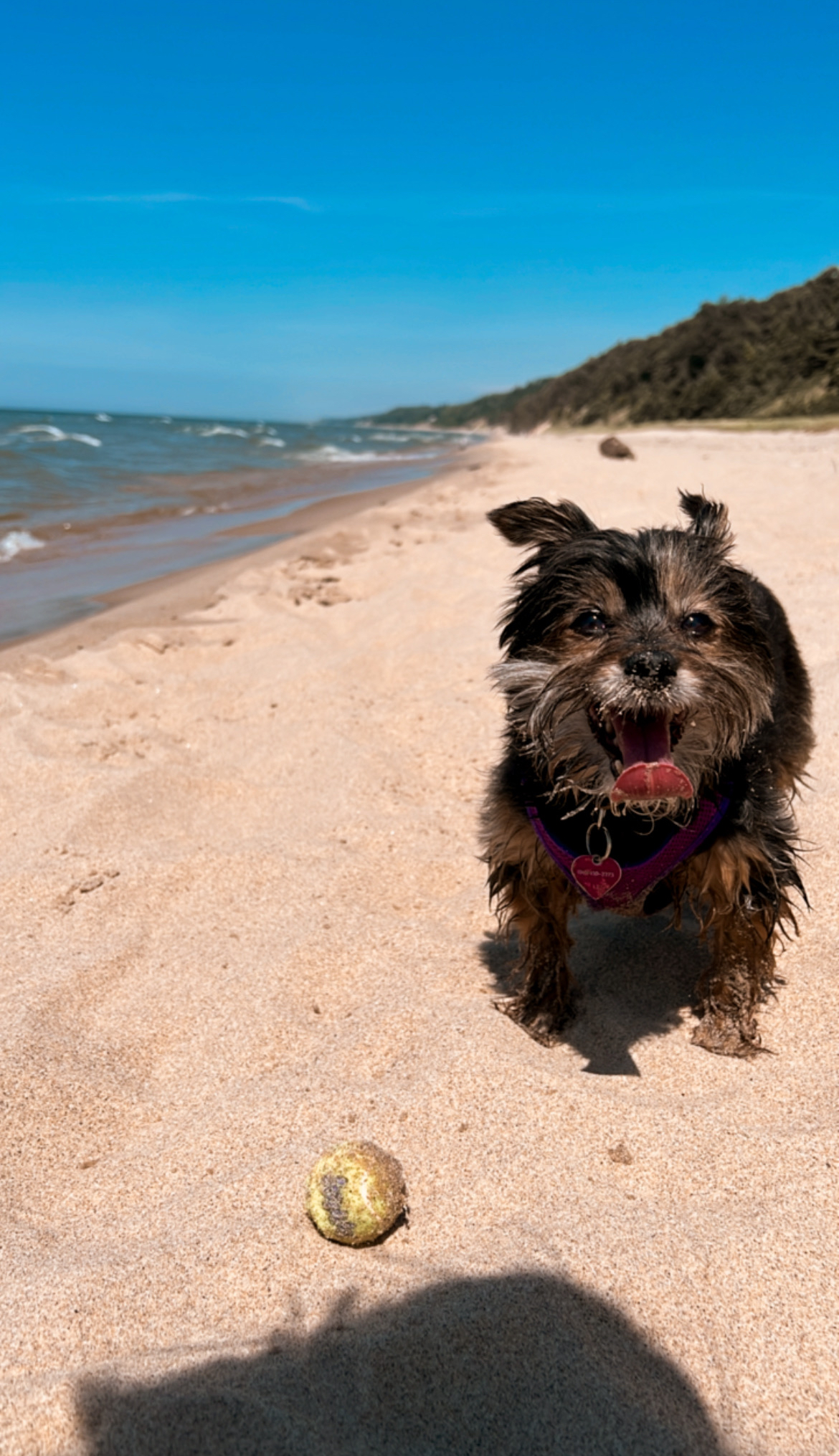
Zoey the dog at one of Emily’s favorite coastline hiking trails. Photo: Emily Stuller