Whether you’re fishing, paddling, or just enjoying your own back yard, you can take part in Great Lakes science.
Participatory science, sometimes called citizen science, allows people to contribute to knowledge and research, regardless of their scientific background. These programs often involve recording data about activities individuals are already doing, such as catching fish and identifying birds. Scientists can use citizen observations and data to provide additional information on Great Lakes ecosystems and how they change over time.
The Great Lakes offer countless ways to participate:

Join the Great Lakes Bioblitz
What’s blooming, flying, and hopping around you? This spring, join the annual Sea Grant Great Lakes BioBlitz to capture your observations of wild, living things.
A bioblitz is a coordinated push to observe, identify, and record as many different non-domesticated species as possible in a given area over a set period of time. Great Lakes BioBlitz participants gather observations through a shared project on the iNaturalist app. The Great Lakes BioBlitz begins every year on Earth Day and ends four weeks later; in 2026, that period will run April 22-May 24. The event is open to anyone in the United States and Canada in and around the Great Lakes basin.
Participants can take an afternoon to explore and document wildlife, pick a location to return to weekly, or set a goal to find something new every day. Organizers also offer weekly challenges to get you out and exploring. Join the project now to start submitting your observations.

Support bird research
Grab your binoculars and bird book, download iNaturalist or eBird, and start contributing to bird research! As you use these apps to record your birding observations, you’re contributing to a public data set that’s already helping scientists answer important research questions.
For example, former Michigan Sea Grant graduate research fellow Dustin Brewer used participatory science data to help shed light on migratory wetland birds, known as rails. He and partners at the U.S. Fish and Wildlife Service wanted to see if playing audio recordings of rail calls would draw migrating rails to restored wetland habitats in central Michigan. In addition to observing birds in wetlands with and without the recorded calls, they looked back at 8 years of participatory science data to understand previous patterns of rail activity in those areas.
Recorded observations in eBird and iNaturalist helped Dustin and his research partners conclude that recorded rail calls were a highly successful tool in helping birds find their way to safe, restored wetland habitats. Learn more about Dustin’s project.
If you’re new to birding or want to brush up on your ID skills, check out our recorded Michigan Birding 101 sessions.
Keep our waterways free from invasive species
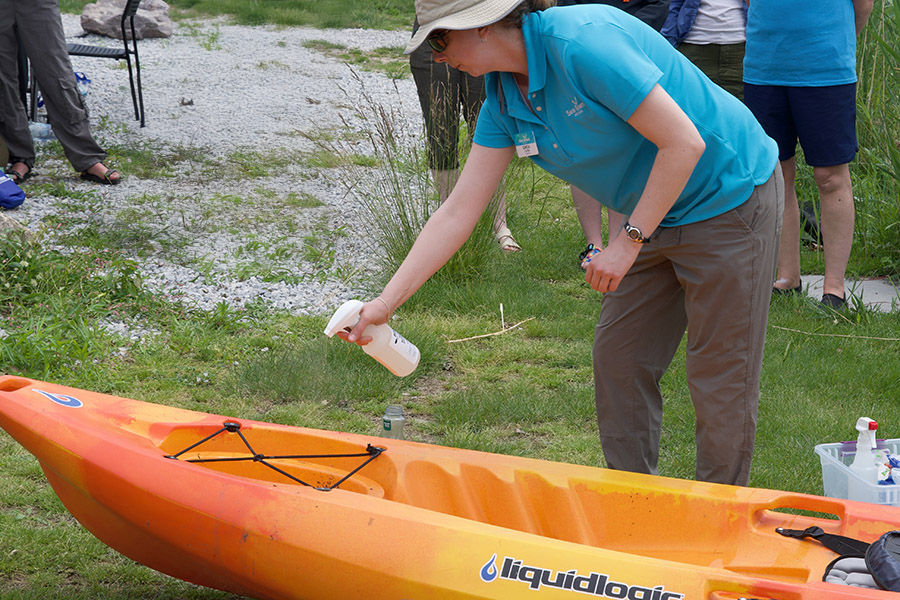
Paddling in Michigan’s lakes and rivers provides a unique opportunity for boaters to spot plants and other species that aren’t supposed to be there. Michigan Sea Grant’s self-paced, online MI Paddle Stewards course can help you get comfortable with identifying and reporting aquatic invasive species through tools like michigan.gov and MISIN. These reports help researchers and managers understand which invasive species are thriving and where. Certain species may trigger a rapid response from state managers to help protect native ecosystems.
MI Paddle Stewards also shows paddlers how to reduce their risk of accidentally ferrying aquatic invasive species from one water body to another. Paddlers should clean, drain, and dry all boats, paddles, trailers, and other gear to keep our waterways healthy and safe.

Get hooked on fish data
Anglers contribute important observations and data about Great Lakes fish. When you’re at the dock or out on the water, a “creel clerk” may ask you questions about your fishing trip. You can help these Michigan Department of Natural Resources employees collect valuable information about Great Lakes fish populations that can inform future management priorities and strategies.
Joining Michigan Sea Grant’s Great Lakes Angler Diary program is also an excellent way to help biologists learn how stocked and wild fish contribute to the Great Lakes and their tributary streams. Your steelhead and salmon catch reports will become part of a data set already helping scientists and managers make wise decisions about stocking and management.
Not all fish-centric participatory science projects rely on catching fish. In West Michigan, Michigan Sea Grant is helping John Ball Zoo recruit volunteers to monitor suckers in local creeks. These native fish make a springtime migration similar to that of salmon, leaving the Great Lakes to cruise up tiny creeks where their young can thrive. Researchers are just starting to understand the life cycle of some sucker species and the role they play in Great Lakes streams. The zoo has an online calendar for scheduling monitoring shifts at local creeks, providing a fun and easy way to get outside and observe the natural world while giving something back in the process. Learn more about sucker monitoring and John Ball Zoo’s involvement.